
Crawl Space & Basement Water in Pagosa Springs, CO
Water under the house is easy to ignore and hard to dry. Describe what you found once, and independent companies serving Pagosa Springs and Archuleta County can reply with free quotes.
Get a Free Quote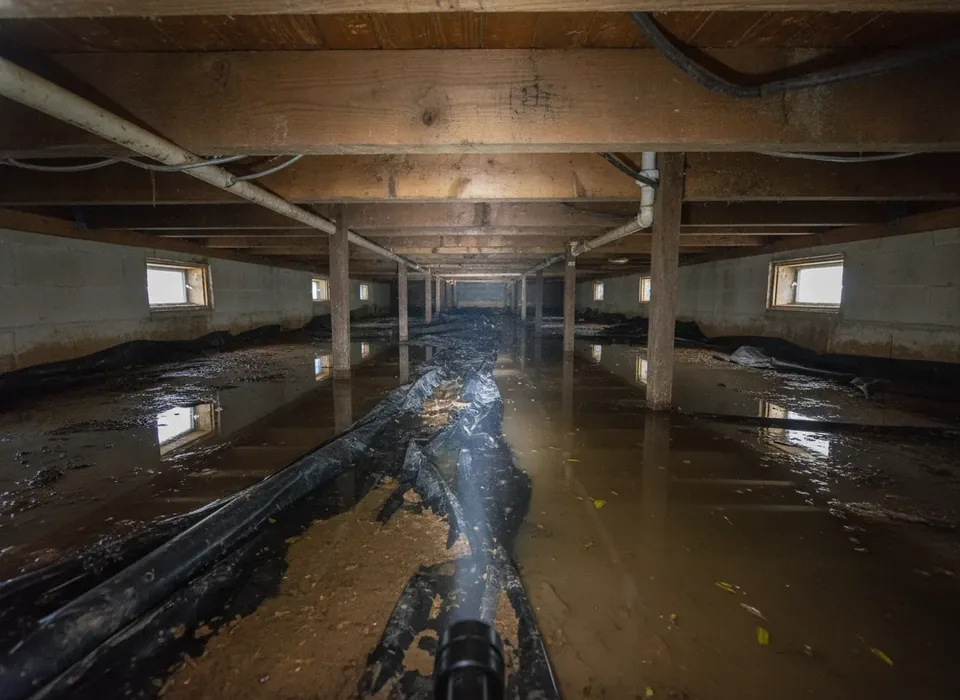
What is going on under the house
Crawl spaces and basements are where water collects. Floodwater pours in through vents and doors. Groundwater rises through the floor after a river runs high. Snowmelt follows the slope toward the foundation. Burst pipes in a cold crawl space drain straight down.
Once there, the water soaks insulation, wets the underside of the subfloor and raises humidity through the whole house. Ductwork in a flooded crawl space can carry contaminated air. Wood floor framing that stays damp can grow mold and lose strength.
Safety first. Do not enter a crawl space or basement with standing water if power, a furnace or a water heater may be in contact with it. Turn off power at the main only if it is safe to do so. River floodwater can carry sewage, so wear boots and gloves. If you are under an evacuation order, leave.
When it is safe, take photos with a flashlight from the access, call your insurer, then call (970) 408-5771 or use the quote form.
What the companies typically do
The work is tight and dirty. Ask what is included.
Pump and extract
Submersible pumps remove standing water. Mud and silt are cleared from the vapor barrier or slab.
Remove soaked materials
Wet insulation between joists, damaged vapor barrier and contaminated debris are bagged and removed.
Clean and treat
Joists, subfloor and foundation walls are cleaned and treated, especially after floodwater or sewage.
Dry the space
Dehumidifiers and air movers run until wood readings reach dry goals. See structural drying.
Restore the barrier
A new vapor barrier and insulation go in once the space is dry, if they are part of the scope.
Under-house water around Pagosa Springs
As of November 1, 2026: the San Juan River crested at 15.02 ft at Pagosa Springs on October 23, 2026, which was the second-highest crest on record at the time, and a second crest was forecast for the night of November 1. Record readings were also reported on the Piedra River near Arboles and the Navajo River near Chromo in late October 2026. High rivers and saturated ground push water into crawl spaces and basements even in homes the surface water never reached. See the 2026 flood recovery guide for dated details and free help.
Wells and septic. Many rural homes have a well pressure tank or well line in the crawl space or basement. The Archuleta County Public Health Department (ACPHD) advises turning off power to a flooded well before inspection, not running the pump until it has been checked, and testing before drinking. ACPHD also advises not pumping a septic tank until groundwater drops. See wells and septic after flooding.
Winter. A wet crawl space going into a Pagosa Springs winter is a frozen-pipe risk, because wet or missing insulation leaves pipes exposed. The January mean low in town is about 1°F. Ask about pipe protection as part of the job, and see frozen and burst pipes.
Second homes. About a third of housing units in Archuleta County are seasonal. Nobody checks the crawl space of an empty house. If you are away, ask a neighbor or property manager to look after storms and in spring snowmelt.
What crawl space and basement water typically costs
| Item | Typical range | Source |
|---|---|---|
| Wet crawl space | $1,500–$5,000 | HomeGuide |
| Flood / flooded-basement cleanup | $4–$12 per sq ft | HomeGuide |
| Sewage cleanup | $7–$15+ per sq ft | HomeGuide |
| Mold remediation | $1,200–$3,750 (avg ≈ $2,300) | This Old House |
Typical national published ranges, not local quotes (Fixr, HomeGuide, This Old House, HomeAdvisor; 2025–2026). Pagosa Springs quotes come from the companies, not from this site.
Floodwater in a crawl space usually lands at the higher end, and mold work is extra if growth is found. The cost guide calculator has a crawl space option.
Colorado rules, permits and insurance
Licensing. Colorado has no state license for water damage restoration or general contracting. Plumbers and electricians are state-licensed, which matters for well pumps, water heaters and wiring in the crawl space. Septic work needs an Archuleta County installer license. Inside Town limits, contractors and their subs need a Town of Pagosa Springs business license; unincorporated Archuleta County has none. Ask for an insurance certificate and a written estimate.
Floodplain permit. If the property is in the floodway or floodplain, Archuleta County requires a Floodplain Development Permit before any work. Inside Town limits, contact the Town Building Division.
Insurance. Standard homeowners policies generally exclude flood and groundwater seepage. NFIP flood policies cover some basement and crawl space items and not others, and NFIP requires a signed proof of loss within 60 days unless FEMA extends it. Ask your agent what your policy says about areas below the first floor. See claim documentation.
Asbestos. Old pipe insulation and duct wrap can contain asbestos. Colorado Regulation 8 requires inspection before disturbing more than small amounts (50 linear ft on pipes, 32 sq ft on other surfaces in single-family homes). Ask before removal.
When it is urgent
- Standing water is touching the furnace, water heater, ducts or wiring.
- Your well equipment was under water.
- The water came from the river or a sewer.
- Floors above feel soft or smell musty.
- Freezing weather is coming and insulation is wet.
Questions to ask companies
- Will you replace the vapor barrier and insulation, or only dry?
- How will you check the subfloor and joists for moisture and mold?
- Will you test old pipe wrap for asbestos?
- Do you coordinate with a plumber or well contractor?
- Will I get photos from inside the crawl space?
Crawl space and basement FAQ
How do I know if my crawl space flooded?
Look from the access with a flashlight for standing water, mud lines on foundation walls or insulation hanging down. A musty smell in the house, higher humidity, cupped floors or a well pump that will not run are other signs. Do not go in if water may be touching power or appliances.
Can a wet crawl space dry on its own?
Rarely in a reasonable time. Crawl spaces have little airflow, and wet insulation holds water against the framing. Left alone, the space can stay damp for weeks and grow mold. Removing wet insulation and running dehumidifiers is the usual approach. Ask for moisture readings on the joists, not just the air.
Is my well safe if the crawl space flooded?
Not until it is checked. ACPHD advises turning off power to a flooded well before inspection and not running the pump until it has been looked at. If the well or pressure tank was under water, it will likely need disinfection and testing before you drink the water. Use bottled water meanwhile.
Does insurance cover water in a basement or crawl space?
Standard homeowners policies generally exclude flood and groundwater. A sudden burst pipe may be covered. NFIP flood policies cover some items below the first floor, such as furnaces and water heaters, but not finished surfaces or most belongings there. Ask your agent for the specifics.
Get free crawl space and basement quotes
Say how deep the water is, where it came from and whether your well or furnace is in that space. No obligation.
Flood or water damage? Get free quotes.
Tell us what happened and independent restoration companies serving Pagosa Springs and Archuleta County can reply with no-obligation quotes.