
Structural Drying & Dehumidification in Pagosa Springs, CO
The floor looks dry. The framing, subfloor and wall cavities often are not. Describe the job once and independent companies serving Archuleta County can reply with free drying quotes.
Get a Free Quote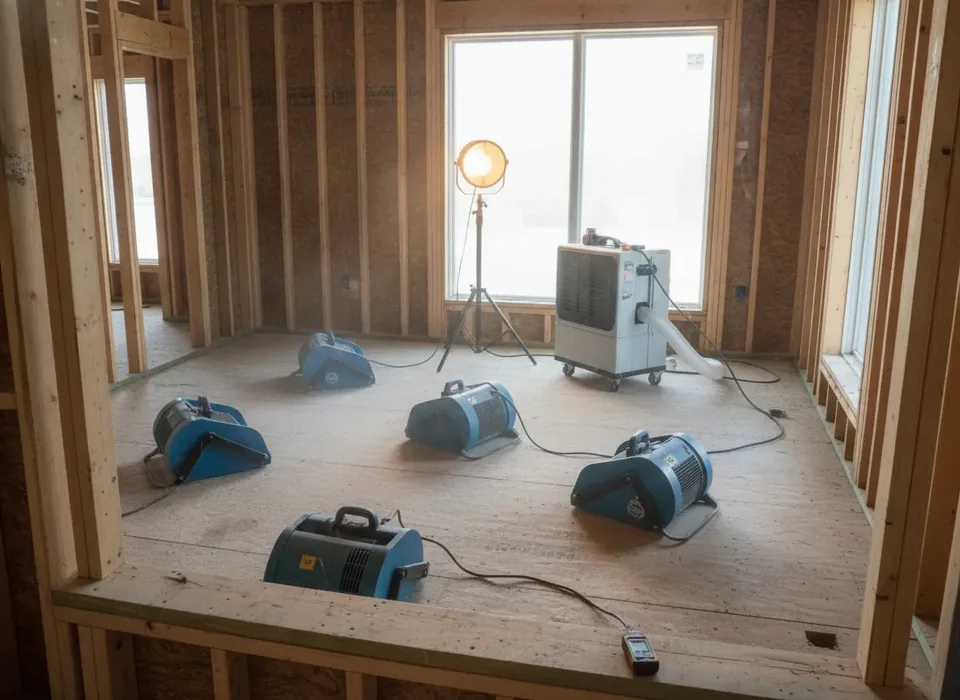
What is going on after the water is gone
Extraction removes the water you can see. Structural drying removes the water you cannot: moisture soaked into studs, sill plates, subfloor, concrete and the back side of cabinets. Wood that stays wet feeds mold and rot, swells and cups, and can hold water for weeks inside a closed wall.
EPA says that if wet materials are dried within 24 to 48 hours, in most cases mold will not grow. Drying equipment is how companies try to stay inside that window, or limit the damage once it has passed. Good drying is measured, not guessed. A company should take readings on day one, set equipment based on those readings and keep logging until wet materials match a dry reference point in the same house.
If you are reading this in a wet house, do three things: take photos, open cabinet doors and closets so air can move, and call (970) 408-5771 or use the quote form. Do not seal up walls or lay new flooring until readings say the structure is dry.
What the companies typically do
Drying is a short project with a lot of measurement. Ask to see the plan.
Map the moisture
Pin and pinless meters, and sometimes thermal cameras, show how far water traveled into walls, floors and framing. The map sets the drying zone.
Open what needs air
Baseboards, toe kicks or small holes in the drywall may be opened so air reaches wall cavities. Wet insulation usually comes out.
Set air movers and dehumidifiers
Equipment is placed by the size of the room and how wet it is. Heat may be added in cold weather so the air can carry moisture.
Log readings daily
Each visit records readings at the same points. Equipment moves or comes out as areas reach their dry goal.
Sign off in writing
You get the final readings and photos. That log supports your claim and tells the rebuild crew it is safe to close walls.
Drying at 7,100 feet
Pagosa Springs sits at about 7,100 ft, and the outdoor air is often dry. That helps once equipment is running, but it can fool you before then: carpet and drywall surfaces feel dry long before the framing behind them is. A hand test is not a moisture reading.
Cold changes the job too. The January mean low in Pagosa Springs is about 1°F, and cold air holds very little water. In late fall and winter, companies often run the furnace or add heat so dehumidifiers work well. Ask how they plan to keep the space warm and what that means for your power bill.
After the October and November 2026 San Juan River flooding, many homes along the river corridor and in rural parts of the county have wet framing and crawl spaces at the same time (as of November 1, 2026). That means a lot of equipment demand at once. Ask each company what it can set up and when, without expecting a promise. The 2026 flood recovery guide covers safety and free help before you hire anyone.
Second homes are a special case. About a third of housing units in Archuleta County (32.6%) are seasonal or recreational, so many owners are managing drying from out of state. Ask for photos with each daily reading so you can follow progress remotely.
Timber and log walls, thick subfloors and concrete slabs dry slowly. If your house has a crawl space under the wet area, see crawl space and basement water, because a wet crawl space can keep a floor damp from below.
What drying typically costs
Drying is usually billed as equipment per day plus labor and monitoring visits, so the number of drying days drives the total. National published ranges for a typical job look like this:
| Item | Typical range | Source |
|---|---|---|
| Typical water damage job | $1,200–$5,000 | Fixr |
| Water extraction | $3.75–$7.50 per sq ft | Fixr |
| Wet crawl space | $1,500–$5,000 | HomeGuide |
Typical national published ranges, not local quotes (Fixr, HomeGuide, This Old House, HomeAdvisor; 2025–2026). Pagosa Springs quotes come from the companies, not from this site.
Flood losses with heavy tear-out often run higher. Use the cost guide calculator for a planning range, then compare written estimates that list equipment counts and daily rates.
Colorado rules and insurance notes
Colorado has no state license for water damage restoration or general contracting. Inside Town limits, the Town of Pagosa Springs requires contractors and their subs to hold a Town business license; unincorporated Archuleta County has none. Ask for an insurance certificate and a written estimate. IICRC drying training is a helpful extra, not a legal requirement.
If drying follows a covered loss like a burst pipe, your insurer will want the moisture log. If it follows river flooding, standard homeowners policies generally exclude flood, and NFIP requires a signed proof of loss within 60 days unless FEMA extends it. Under C.R.S. 10-4-110.8, a Colorado insurer must give you a copy of your policy within 3 business days of a request. See claim documentation for what to keep.
Opening walls in an older home raises the asbestos question. Colorado Regulation 8 requires inspection before disturbing more than small amounts of material (32 sq ft or 50 linear ft in single-family homes). Ask before any drywall is cut.
When it is urgent
- Walls, subfloor or framing were wet for more than a day.
- You smell must or see swelling, cupping or staining.
- The house is closed up and unheated.
- A contractor wants to close walls before anyone has taken readings.
Questions to ask companies
- What are the dry goals, and how will you measure them?
- How many air movers and dehumidifiers, at what daily rate?
- Will I get daily readings and photos in writing?
- How will you keep the space warm enough to dry?
- What happens if an area is not drying on schedule?
Structural drying FAQ
How long does structural drying take?
Many rooms reach their dry goals in about three to five days once equipment is running, but flooded framing, subfloors, slabs and crawl spaces often take longer. Cold weather and closed wall cavities add time. The real answer comes from daily readings: equipment should stay until materials match a dry reference point in the same house.
Can I just open the windows and run fans?
Fresh air helps, but box fans move surface air and do little for wet framing or wall cavities. In cold weather, open windows can slow drying by chilling the space. Dehumidifiers and air movers placed by moisture readings are what pull water out of the structure. Keep photos of anything you do yourself.
Why do companies drill holes in my walls?
Small holes near the bottom of a wall, or removed baseboards, let dry air into the cavity so the studs and back of the drywall can dry without full tear-out. It is a common technique. In older homes, ask about asbestos testing first, because cutting drywall can disturb joint compound.
Does drying stop mold?
Drying within 24 to 48 hours means mold will not grow in most cases, according to EPA. Drying later still stops new growth, but any mold that already formed needs cleaning or removal. If the house sat wet for several days, ask the company to check for mold before walls are closed. See our mold after flooding page.
Get free structural drying quotes
Tell the companies what got wet, when and whether the heat is on. Independent companies reply directly. No obligation.
Flood or water damage? Get free quotes.
Tell us what happened and independent restoration companies serving Pagosa Springs and Archuleta County can reply with no-obligation quotes.