
How Much Does Flood Cleanup Cost in Pagosa Springs?
Flood cleanup is usually priced by the square foot of affected area, adjusted for what the water carried and how much has to come out of the walls and floors. National published ranges put flooded-area cleanup at about $4 to $12 per square foot. A 500 square foot flooded lower level works out to roughly $2,000 to $6,000 for cleanup and drying on that basis, before rebuild.
Those are planning numbers. They are not local quotes, and large river-flood losses with heavy tear-out often run past them. Below are the published ranges, the things that move a quote up or down, and what to check on any estimate you receive after the October 2026 San Juan River flooding.
Safety first, as of November 1, 2026. A second San Juan River crest is forecast for the night of November 1 (the National Weather Service forecast 22.0 ft; Archuleta County, via the Town, forecast about 19.71 ft). Forecasts are forecasts and can change. If you are under an evacuation order, leave and come back to this later. Do not go into a flooded building until officials say it is safe, and turn off power only if you can do it safely.
Typical published ranges
Typical national published ranges, not local quotes (Fixr, HomeGuide, This Old House, HomeAdvisor; 2025–2026). Pagosa Springs quotes come from the companies, not from this site.
| Item | Typical range | Source |
|---|---|---|
| Water extraction | $3.75–$7.50 per sq ft | Fixr |
| Flood / flooded-basement cleanup | $4–$12 per sq ft | HomeGuide |
| Typical water damage job | $1,200–$5,000 | Fixr |
| Sewage cleanup | $7–$15+ per sq ft | HomeGuide |
| Mold remediation | $1,200–$3,750 (avg ≈ $2,300) | This Old House |
| Wet crawl space | $1,500–$5,000 | HomeGuide |
| Burst pipe repair | ≈ $500 (range $200–$3,000) | HomeAdvisor |
For a rough number for your own home, the water damage restoration cost guide has a calculator that adds contaminated water, mold and crawl space work.
What drives the price of flood cleanup
Water category
River floodwater is generally treated as contaminated (Category 3) water because it can carry sewage, soil and debris. That means protective gear, removal of porous materials such as carpet, pad and drywall, and cleaning and antimicrobial treatment of what stays. It is why sewage and floodwater ranges sit above clean-water extraction.
Affected area and tear-out height
Square footage is the base. How high the walls are cut also matters: a few inches of water may mean a cut two feet up, while deeper water means more drywall, insulation and trim to remove and haul.
Mud, silt and debris
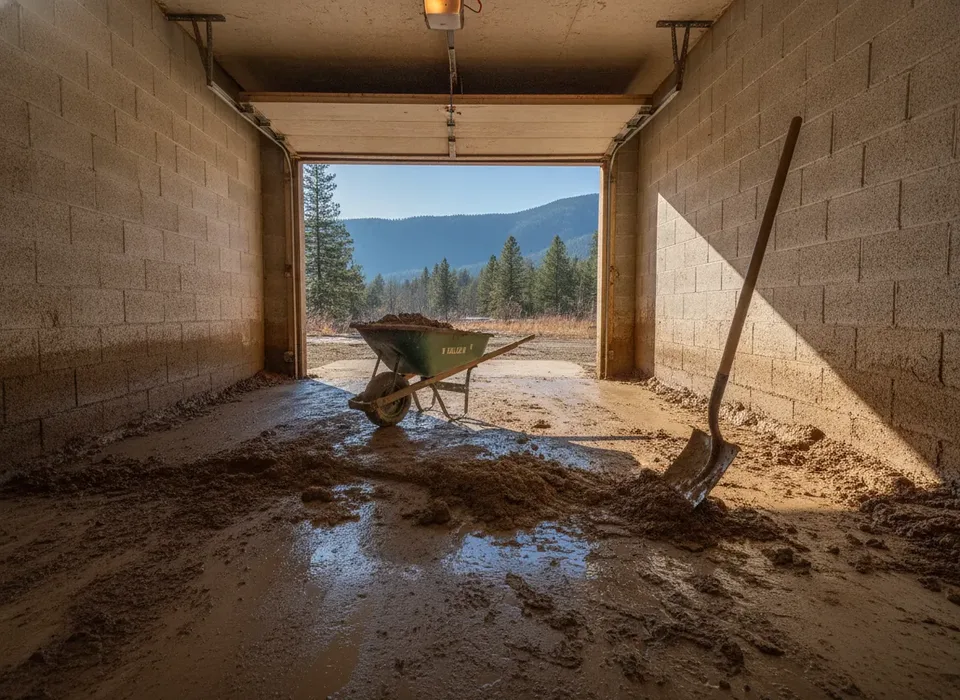
Shoveling out river mud is slow work. Hauling adds cost too. The Archuleta County Landfill (9179 CR 500) takes flood-damaged appliances, belongings and drywall that is separated before arrival, and the County says all disposal fees are the responsibility of the individual. The Town and County wood-only debris sites accept wood only, from properties in their own jurisdiction.
Drying days and equipment
Air movers and dehumidifiers are usually billed per unit per day. Thick framing, subfloors and cold weather can stretch drying time. Ask for daily moisture readings so you can see why equipment is still running.
Crawl spaces and lower levels
Wet crawl spaces are tight, dirty work, and published ranges run $1,500 to $5,000 on their own. See crawl space and basement water.
Access and distance
Road closures and washouts can affect when and how a crew reaches a property. Some companies serving the area are based elsewhere in the region. Ask each company whether travel or access is reflected in its estimate, and how.
What these figures leave out
- Rebuild: new drywall, paint, flooring, cabinets and trim
- Contents cleaning, storage or replacement
- Asbestos testing and abatement, which may be needed before tear-out in older homes (see asbestos and flood-damaged drywall)
- Well disinfection and testing, or septic repair
- Permits, including the Archuleta County Floodplain Development Permit required before work in the floodplain
Will insurance pay for flood cleanup?
Standard homeowners policies generally exclude flood, according to the Colorado Division of Insurance. Flood damage is usually covered only by a National Flood Insurance Program (NFIP) policy or a private flood policy. If you have NFIP coverage, notify your insurer and know that a signed proof of loss is due within 60 days of the loss unless FEMA extends the deadline. Water from a burst pipe is a different peril, and many homeowners policies treat it differently.
Colorado insurers must give you a copy of your policy within 3 business days of your request (C.R.S. 10-4-110.8). Ask for it before you assume anything about coverage. As of November 1, 2026, FEMA Individual Assistance has not been approved for the 2026 flooding, and no SBA disaster declaration has been made for it. For documentation help, see flood insurance claim documentation.
Disaster-period pricing rules. Archuleta County is in a declared state disaster (October 22, amended October 23, 2026). During a disaster period, Colorado law (C.R.S. 6-1-730) treats prices so excessive as to amount to price gouging on building materials, repair and reconstruction, and emergency cleanup services as an unfair act. Compare written, itemized estimates and keep copies. More in avoiding contractor scams after a Colorado flood.
Ways to lower the cost, honestly
- Check free help first. Crisis Cleanup volunteers handle muck-out, debris and mold at 970-283-7325, through Nov 6, 2026 per the Town; check current status. Help is not guaranteed. Call 211 for other needs.
- Photograph everything before it is removed, then pull out wet contents yourself if it is safe.
- Get at least two written, itemized estimates and compare unit prices, not just totals.
- Ask what is included: hauling, antimicrobial treatment, moisture logs, final readings.
- Start drying early. EPA guidance is to dry within 24 to 48 hours or assume mold, and mold work adds cost.
The Pagosa Springs flood 2026 recovery guide covers safety, debris rules and assistance status in one place. When you want numbers for your own property, request free quotes from independent local companies. Many offer free estimates.
Frequently asked questions
How much does flood cleanup cost per square foot?
National published ranges put flood and flooded-basement cleanup at about $4 to $12 per square foot (HomeGuide), and water extraction at $3.75 to $7.50 per square foot (Fixr). These are national ranges, not local quotes. Pagosa Springs quotes come from the companies and depend on the water, area and tear-out.
What does a 500 square foot flood cleanup cost?
Using the $4 to $12 per square foot national range, a 500 square foot flooded area works out to roughly $2,000 to $6,000 for cleanup and drying. Mold work, crawl spaces, rebuild, asbestos testing and contents are extra, and large river-flood losses often exceed these figures.
Does homeowners insurance pay for flood cleanup in Colorado?
Standard homeowners policies generally exclude flood, according to the Colorado Division of Insurance. Flood damage is usually covered by an NFIP or private flood policy. NFIP requires a signed proof of loss within 60 days unless FEMA extends it. Ask your insurer for a copy of your policy.
Are there free options for flood cleanup in Pagosa Springs?
Crisis Cleanup volunteers help with muck-out, debris and mold at 970-283-7325, through Nov 6, 2026 per the Town; check current status, since help is not guaranteed. Call 211 for shelter, food and financial resources. Debris disposal at the County landfill carries fees.