
Protecting a Vacant Second Home From Frozen Pipes
About a third of homes in Archuleta County are seasonal or second homes. The Census Bureau's American Community Survey (2020 to 2024) counts 3,211 seasonal or recreational units, 32.6% of all housing in the county. Pagosa Springs sits around 7,100 ft, and the January mean low is about 1°F. Put those two facts together and you get one of the most common water losses here: a pipe freezes in an empty house, splits, and runs for days before anyone notices.
This checklist is for owners who leave a Pagosa Springs, Pagosa Lakes or San Juan region home for weeks or months over the winter. Most of it is simple, and most of it costs far less than a single burst pipe.
Why empty mountain homes freeze
Pipes rarely freeze in the middle of a heated room. They freeze where cold air reaches them and nobody is around to notice the heat failed:
| Where pipes freeze | Why | What helps |
|---|---|---|
| Crawl spaces | Vents, gaps and thin insulation let outside air in | Seal gaps, insulate lines, consider heat tape rated for the pipe |
| Exterior walls | Supply lines to kitchens and baths often run in outside walls | Open cabinet doors if heat stays on; drain lines if it does not |
| Garages and mudrooms | Unheated or lightly heated spaces | Shut off and drain lines that serve these areas |
| Hose bibs and irrigation | Water trapped in the line outside | Disconnect hoses, close the inside valve, drain the bib |
| Well and pressure tank areas | Pump houses and tanks can sit in cold spaces | Ask a well contractor about heat and insulation for that space |
A power outage, a furnace that runs out of propane, or a tripped breaker can drop a house below freezing in a day or two of hard cold. The damage often shows up only when the house warms and the split pipe starts flowing.
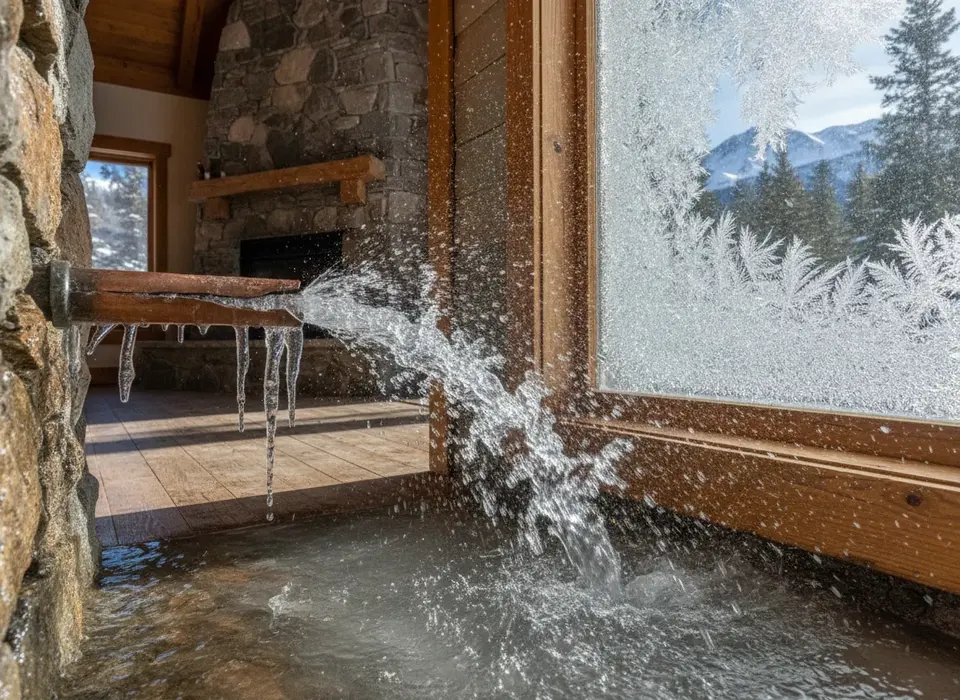
The before-you-leave checklist
- Know where your main shutoff is and make sure it turns. Tag it so a neighbor or plumber can find it.
- Decide: heat on, water off, or both. For most owners, keeping heat on and shutting off the main water is the safer combination. Leaving the heat on protects the structure; shutting the water limits what can leak.
- Drain the lines after shutting the main: open the lowest faucet and the highest one, flush toilets, and let lines empty. A plumber can winterize fully, including traps and the water heater, if you are leaving the house unheated.
- Disconnect hoses and drain outdoor faucets and irrigation.
- Fuel and service the heat. Fill propane or heating oil, replace the furnace filter, and have the system checked before winter.
- Insulate exposed lines in crawl spaces and garages, and fix gaps that let cold air in.
- Install sensors. Wi-Fi temperature and leak sensors send an alert to your phone if the house gets cold or water appears. An automatic shutoff valve can close the main when it detects a leak.
- Leave cabinet doors open under sinks on exterior walls if the heat stays on.
Set up a check-in plan
If you are away for the winter, ask a neighbor or property manager to check the heat and confirm the water is off. Give them a key, the shutoff location, your furnace and propane contacts, and a plumber's number. Agree on a schedule, and ask them to check again after a deep cold snap or a power outage.
A check-in is also worth having in writing if your insurer asks how the home was looked after while it was empty.
Insurance and vacant homes
Many homeowners policies treat a sudden burst pipe differently from flooding, and a burst pipe is often a covered peril. But policies for second homes or vacant homes can include conditions about freezing, such as keeping heat on or shutting off and draining the water. Some also have vacancy clauses that change coverage after a home sits empty for a set period. Carriers differ, so check your policy's vacancy and freeze conditions before you leave.
Colorado insurers must provide a copy of your policy, including declarations and endorsements, within 3 business days of your request (C.R.S. 10-4-110.8). Ask for it now and read the freeze and vacancy wording. If you ever file, photos, moisture readings and repair invoices help; see claim documentation help.
If you find a burst pipe
Shut off the water
Close the main. If water is near outlets or the panel, keep clear and turn off power only if you can do it safely.
Photograph everything
Take photos and video of the pipe, the water and each wet room before anything is moved.
Call your insurer
Report the loss and ask what documentation they want.
Call a plumber and start drying
Plumbing repairs in Colorado need a state-licensed plumber. Drying should start quickly: EPA guidance says materials dried within 24 to 48 hours usually will not grow mold.
If the pipe ran for days, plan for wet drywall, insulation and subfloor, and possibly a wet crawl space. See frozen and burst pipes and structural drying for what the work typically involves.
What a burst pipe typically costs
Typical national published ranges, not local quotes: burst pipe repair averages about $500, with a range of $200 to $3,000 (HomeAdvisor). The water damage that follows is usually the larger bill; a typical water damage job runs $1,200 to $5,000 (Fixr), and a wet crawl space $1,500 to $5,000 (HomeGuide). Pagosa Springs quotes come from the companies. The water damage restoration cost guide has the full table and a calculator.
If your home was near the 2026 flooding
Second homes along the San Juan, Piedra, Navajo and Rio Blanco rivers may have taken on water in the October 2026 flooding while their owners were away. As of November 1, 2026, a second crest is forecast for the night of November 1, with mandatory evacuations in effect. Do not travel into closed areas or enter a flooded building until officials say it is safe. Once it is, a wet crawl space or flooded well heading into winter adds freeze and mold risk. The Pagosa Springs flood 2026 recovery guide covers safety, wells and septic, and insurance steps.
If you are managing a home from out of town, you can describe the damage once and independent local companies can reply with quotes. Mention that it is a second home and who can give access.
Frequently asked questions
Should I leave the heat on or shut the water off in a vacant cabin?
For most owners, both: keep the heat on and shut off and drain the water. Heat protects the structure; a closed main limits what can leak if a pipe splits. If you will leave the home unheated, have a plumber winterize it fully. Check your policy's freeze conditions too.
Does insurance cover a burst pipe in a second home?
Often a sudden burst pipe is a covered peril, but second-home and vacant-home policies can include freeze and vacancy conditions, such as keeping heat on or draining the water. Carriers differ. Ask your insurer for a copy of your policy, which Colorado requires within 3 business days of a request.
How cold does it get in Pagosa Springs in winter?
Pagosa Springs sits at about 7,100 ft, and the January mean daily low is about 1°F. That is cold enough to freeze pipes in crawl spaces, exterior walls and garages within a day or two if the heat fails in an empty house.
What is the best way to monitor a vacant home in winter?
Combine a person and technology. Ask a neighbor or property manager to check the heat and confirm the water is off on a set schedule. Add Wi-Fi temperature and leak sensors that alert your phone, and consider an automatic shutoff valve on the main.